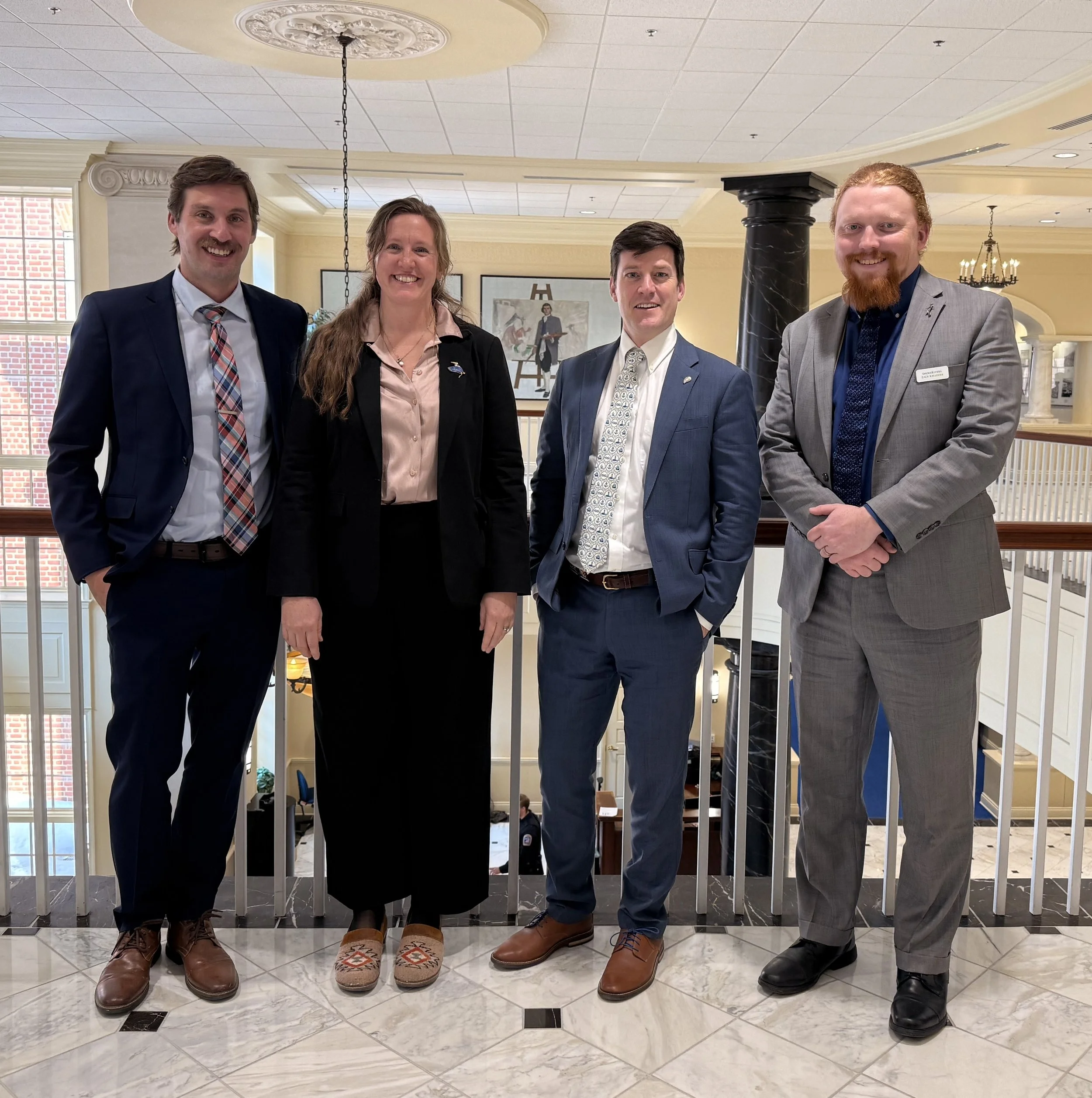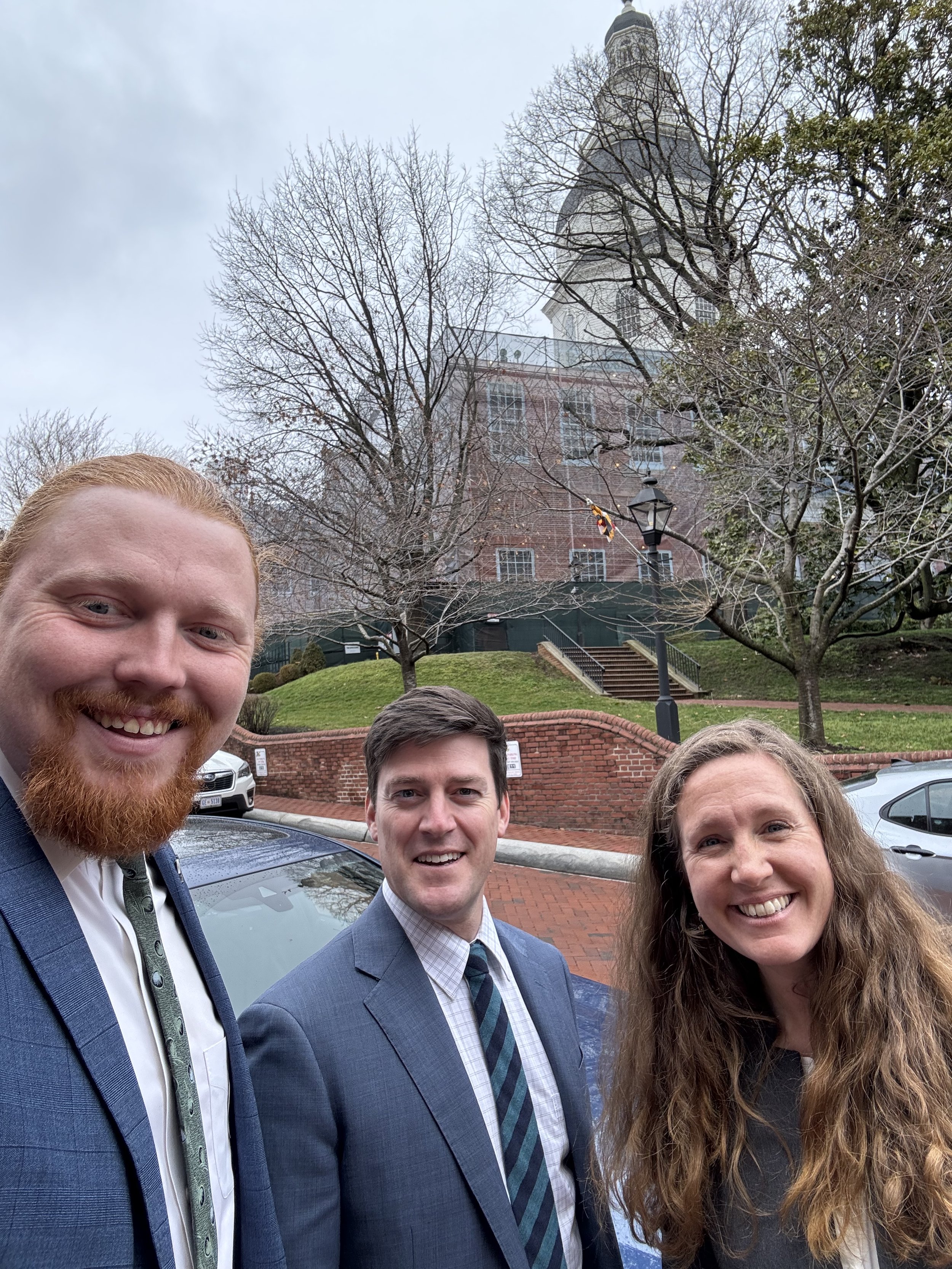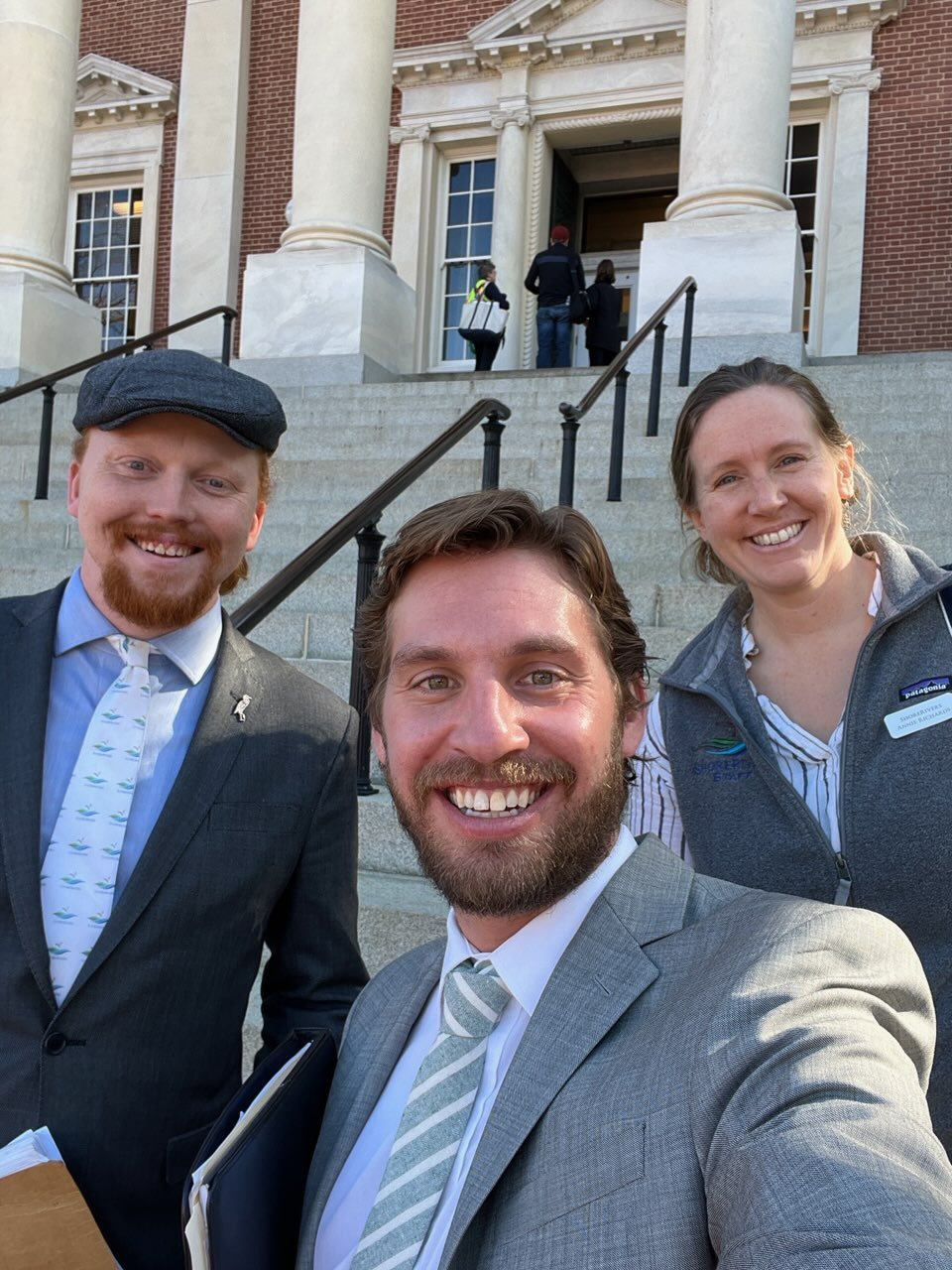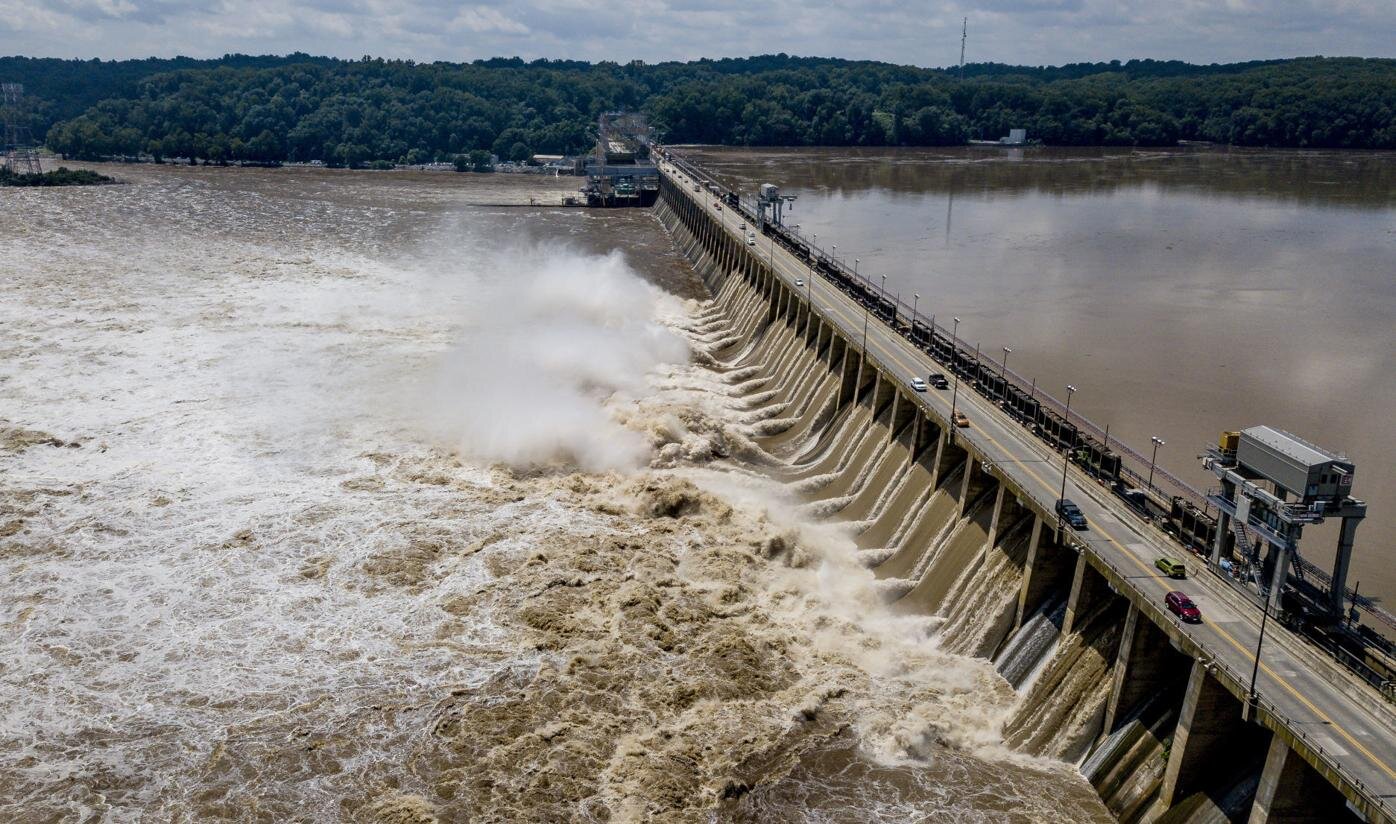
ShoreRivers and the 2026 maryland legislative session
Please bookmark this page, as updates on important dates and current bills will be added here throughout the Maryland General Assembly’s 2026 Legislative Session. Below, please find dates to note, resources for providing testimony, and information on ShoreRivers’ leadership legislation.
Want to get involved? ShoreRivers’ Advocacy Volunteer program gives volunteers the training, resources, and opportunities to learn about the legislative process and feel empowered to take action to support clean rivers. Use the button below to learn more, or email mwhite@shorerivers.org.
ShoreRivers’ leadership Legislation
-
Update, 2/10 - The governor's budget was released and all of our environmental funding requests were met, including the reinstatement of Maryland Agricultural Cost Share Funding (MACS). We are now turning our attention to the general assembly to ensure those protections remain as the budget makes its way through the House and Senate.
——————————
State environmental funding assists the Eastern Shore in visible and tangible ways. It supports farmers who are investing in healthier soils and more resilient fields. It enables water quality improvements that sustain fisheries, protect drinking water, and keep waterways safe for recreation. It provides small towns with resources to modernize stormwater and wastewater systems that would otherwise be financially out of reach. It supports local businesses — nurseries, engineering firms, construction companies, conservation service providers — that together form a growing rural restoration economy. These dollars stay in our communities and circulate locally, strengthening the very economies that sustain the Eastern Shore’s identity and future.
RECOMMENDED ACTION: ShoreRivers urges that the Fiscal Year 2027 budget maintain environmental, agricultural conservation, and clean water program funding at least at FY 2026 levels and additionally, reinstates the Maryland Agricultural Cost Share program (MACS) at MDA.
Click here to learn more about protecting environmental funding for Eastern Shore waterways.
-
SB165/HB146 is designed to protect public health and the environment by ensuring septic systems are properly maintained, inspected, and monitored.
The Bay Program’s CESR report finds that meeting the Bay pollution goals depends on reducing nonpoint sources of pollutants, which includes onsite wastewater systems (septics). Currently, in 17 out of 24 MD counties, the nitrogen pollution from these systems now exceeds the nitrogen pollution from municipal wastewater treatment plants. Failing septic systems contribute excessive nitrogen, phosphorus, and various bacterial pollution to both groundwater systems and surface waters of the state — a threat to our natural resources and our communities.
According to UMD “Public health research in Maryland found significant positive associations between high concentrations of septic systems in flood plains and increased infections from Campylobacter and Salmonella”. Failing septic systems can be attributed to old age, changing soil conditions, compromised drainfields, flood events, and more. Unless regular inspections occur, failing systems can go undiagnosed for generations, increasing nutrient pollution levels in our local waterways and even contaminating adjacent wells.
-
Maryland spreads nearly 90% of its biosolids, or sewage sludge, on farmland as fertilizer, however, much of the biosolids contain PFAS, persistent “forever chemicals” linked to serious health and environmental harms. These chemicals enter wastewater from industrial, landfill, and household sources, accumulating in its biosolids, and then contaminating soil, groundwater, crops, and wildlife. This practice threatens rural communities, drinking water, and food systems, particularly on the Eastern Shore, and demands urgent limits and testing to prevent irreversible contamination.
SB719/HB925 will require the Maryland Department of the Environment to set and phase-in, tiered concentration limits for PFOS plus PFOA in biosolids applied to agricultural land. By preventing costly, irreversible PFAS contamination of farmland, water, and food systems while providing clear, phased standards, this bill delivers high public health and environmental returns at minimal regulatory cost.
-
SB371/HB395 would exempt Concentrated Animal Feeding Operations (“CAFOs”), including new poultry houses, from Maryland’s longstanding requirement to obtain Clean Water Act discharge permit coverage before beginning construction. In effect, this bill would move Maryland toward a build-first, permit-later approach for one of the most pollution-intensive industries in the state.
This legislation is being advanced in response to a serious administrative failure: the Maryland Department of the Environment (MDE) did not renew the CAFO General Permit on time, creating delays and backlogs for permit coverage. However, it does not address the root cause of the problem. Instead of strengthening accountability at MDE, the bill attempts to treat a symptom by weakening a foundational safeguard of water pollution law: permit first, build second.
Rather than weakening Clean Water Act protections, the General Assembly should focus on the real issue: ensuring MDE fulfills its legal responsibilities. ShoreRivers is urging the legislature to pursue solutions that improve agency accountability, such as requiring MDE to issue timely individual permits if a General Permit is not renewed on schedule. This approach would create incentives for on-time renewal while maintaining permit-first safeguards for all industries.
Dates to Note:
Thursday, March 5, at 5pm: In-person Advocacy in Action event
Friday, April 17, at 12pm: Virtual Lunch and Learn Legislative Wrap Up Meeting