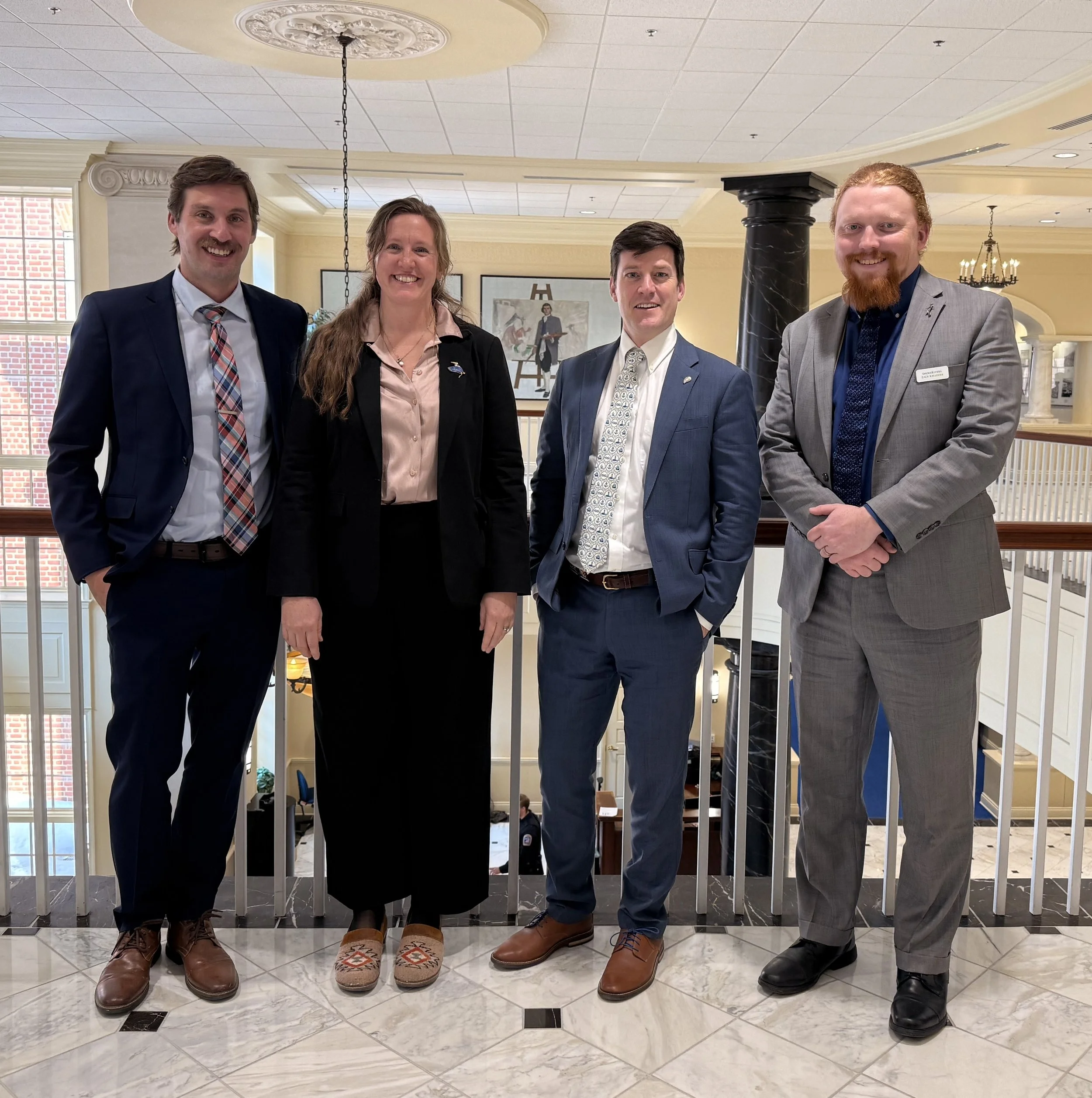
ShoreRivers’ advocacy work is led by its four Riverkeepers: Matt Pluta, Choptank Riverkeeper; Annie Richards, Chester Riverkeeper; Ben Ford, Miles-Wye Riverkeeper; and Zack Kelleher, Sassafras Riverkeeper. Throughout this year’s legislative session, the organization will work to protect our local rivers against the major issues that impact water quality on the Eastern Shore.
Now that the Maryland General Assembly has reconvened for the 448th Legislative Session, ShoreRivers’ advocacy efforts are in full swing. The organization’s advocacy work, which is led by its Riverkeepers, is fundamental to creating system-wide change to protect local rivers against the major issues that impact water quality on the Eastern Shore.
Once again, fiscal pressures loom large this session due to a 1.5+ billion-dollar deficit facing the state, coupled with continued financial instability at the federal level. This pressure, combined with Maryland’s focus on meeting affordable housing goals, means that ShoreRivers and our members will be working hard to shine a spotlight on Eastern Shore water quality — and the policies we need to protect and restore our rivers.
Key efforts this year include the following, though additional bills and legislation are likely to be added to this list as they are introduced and prove to be in line with ShoreRivers’ mission of protecting Maryland’s Eastern Shore waterways through science-based advocacy, restoration, education, and engagement.
Sewage Sludge - Per- and Polyfluoroalkyl Substances - Regulation (SB719/HB925), which will require the Maryland Department of the Environment to phase in tiered limits for PFOS plus PFOA in biosolids used as fertilizer on agricultural land, while using these safeguards to drive upstream industrial pretreatment and PFAS source reductions. PFAS are a class of “forever chemicals” that get into municipal wastewater from industries that use these chemicals and from household products that contain them. Biosolids are the waste residuals from municipal wastewater treatment plants often used as soil conditioner and fertilizer. With more than one-third of the state’s permitted land for biosolids use on the middle and upper Eastern Shore, this bill will protect Eastern Shore farmers and their farmland, rural communities, as well as our downstream rivers — and the aquatic life and seafood they produce — from PFAS contamination.
A bill to establish On–Site Sewage Disposal System inspection requirements (SB165/HB146), which will require septic systems to be inspected and pumped at a property transfer or during a change of tenant in a rental home. Reasonable exceptions apply, and an inspection and pumping service is good for three years. Currently, in 17 out of 24 Maryland counties, the nitrogen pollution from these systems now exceeds the nitrogen pollution from municipal wastewater treatment plants. Failing septic systems contribute excessive nitrogen, phosphorus, and various bacterial pollution to both groundwater systems and surface waters of the state — a threat to our natural resources and our communities. Unless regular inspections occur, failing systems can go undiagnosed for generations, increasing nutrient pollution levels in our local waterways and even contaminating adjacent wells.
Defending important funding sources through budget advocacy will be another important priority for ShoreRivers this session. With a budget deficit pressuring Maryland legislators and advocates to “do more with less,” ShoreRivers is committed to defending historically beneficial environmental funds such as the Bay Restoration Fund, the 2010 Trust Fund, the Chesapeake Bay Trust, State Aided Institutions, the Clean Water Commerce Account, and the Maryland Agricultural Cost Share Program. Defending environmental funding isn’t just about restoration projects and facility upgrades, it’s also about enforcement and accountability. Maryland is a national leader in environmental protection. To ensure those laws are enforced properly, our agencies need adequate staffing and resources.
ShoreRivers is also working to support legislation that acknowledges and better plans for Maryland’s increased flood risks (HB257 and HB200), enhances protections for the Critical Area (SB178/HB258, and HB247), and enhances environmental grant funding and the inclusion of Community Ambassador support (HB254) — a concept that was developed and piloted by ShoreRivers and Envision the Choptank partners. Additionally, we have already testified in opposition to legislation that would change the permitting process for living shorelines in select counties in MD and set a dangerous precedent for state standards (SB368/HB613), as well as a bill that would allow a concentrated animal feeding operation to proceed with construction of a facility before obtaining a Clean Water Act discharge permit (SB371/HB395) To learn more about these bills and how you can be involved in protecting our rivers through Maryland’s legislative session, visit shorerivers.org/2026-legislative-session and inquire about joining our volunteer advocacy program.
At ShoreRivers, we engage in legislative advocacy because addressing non-point source pollution — or "runoff pollution," the leading contributor of pollutants to our rivers — is often most effective by updating policies that address modern challenges and support restoration goals. By combining locally driven restoration efforts with river-friendly policies, we are encouraging the behavioral changes needed to improve land use practices and better manage the landscapes responsible for nutrient and sediment runoff. ShoreRivers looks forward to a productive legislative session working with members of the Maryland General Assembly, fellow environmental advocates, and our local communities. Visit shorerivers.org to learn more and engage with this important work.